Crawl Space Encapsulation in Huntsville, AL
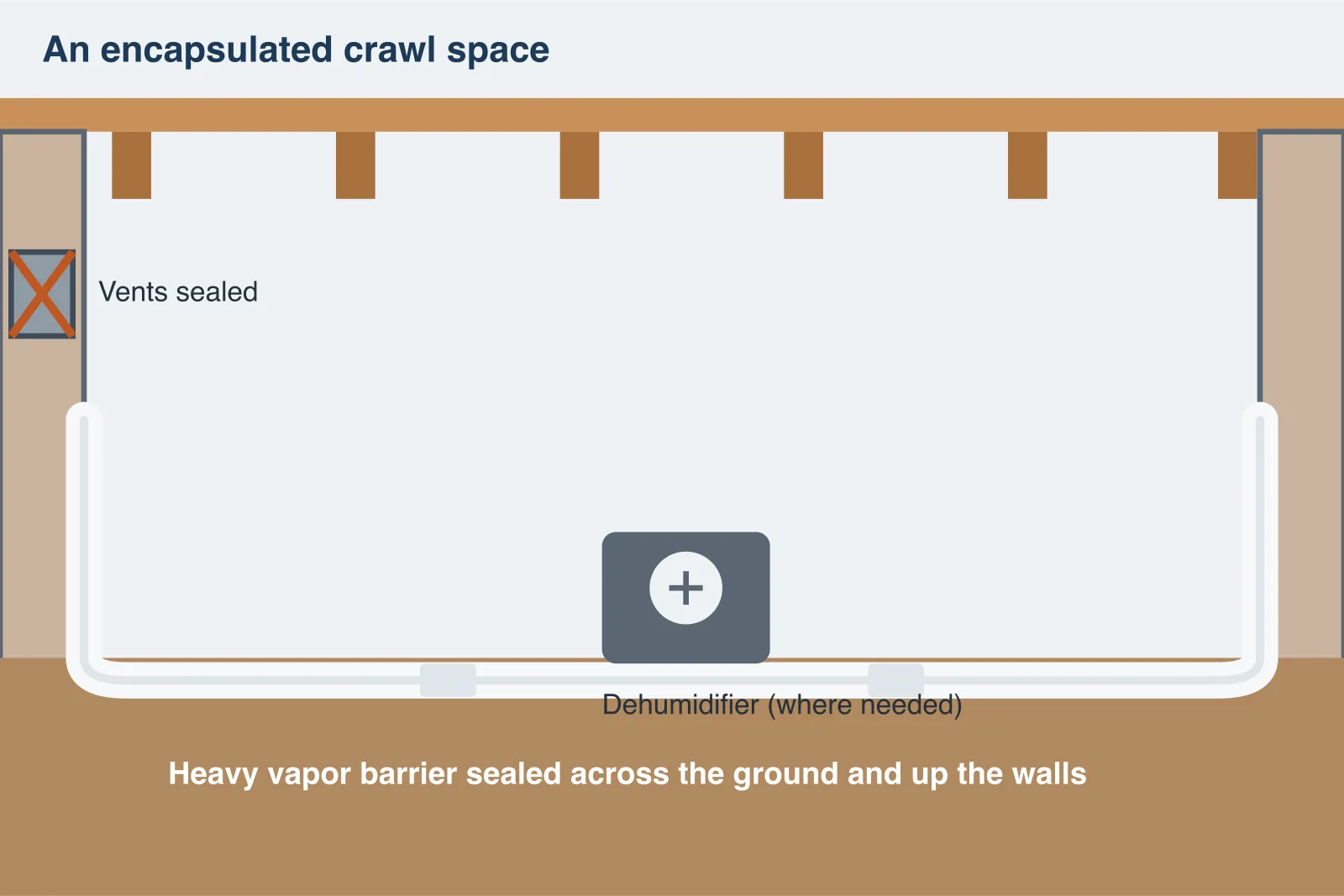
Under most Huntsville homes there's a strip of bare, damp earth quietly raising your humidity, feeding mold, and rusting your ductwork. Encapsulation seals that off: a heavy vapor barrier across the ground and walls, sealed vents, and - where needed - a dehumidifier, turning the crawl space from a moisture problem into a clean, dry buffer under your house.
Foundation Repair of Huntsville assesses crawl spaces across Huntsville free of charge and tells you honestly whether encapsulation is worth it for your home.
What Encapsulation Actually Does
A vented, open-ground crawl space lets ground moisture evaporate up into your home's framing and air, all year long. In North Alabama that's a lot of moisture: our Limestone Valley soils are fine-textured and clay-rich (per the Alabama Cooperative Extension System), and clay holds water. Because air moves upward through a house, what's in your crawl space air ends up in your living-room air.
Encapsulation closes the system:
- Cleanup and prep - debris out, existing damage assessed. (If joists or supports are already sagging, repair comes first - sealing a broken crawl space just gives you a tidy broken crawl space.)
- Drainage where needed - standing water is dealt with before sealing, not under it.
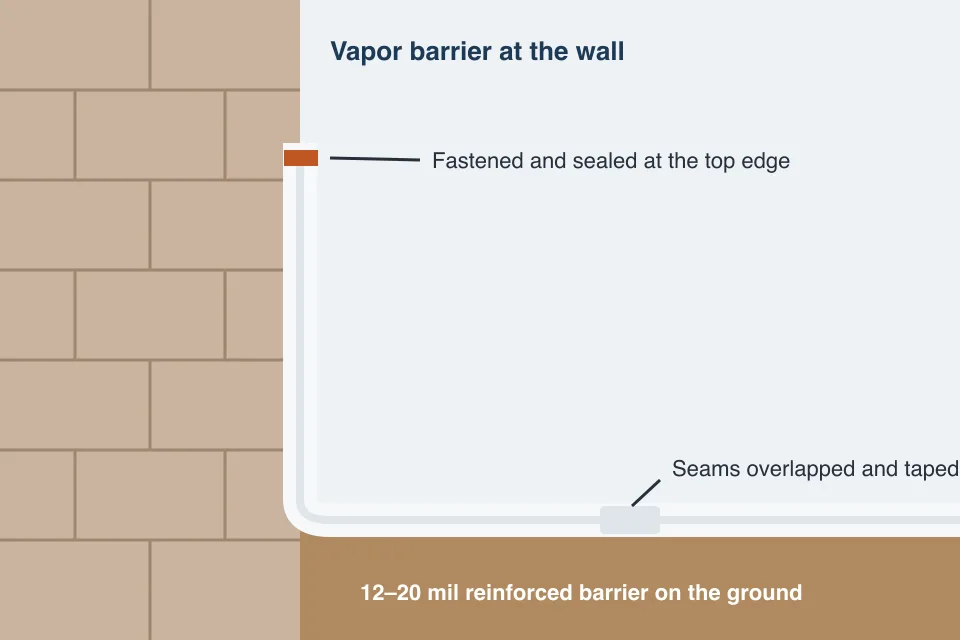
- Heavy-duty vapor barrier - thick polyethylene sheeting across the ground and up the walls, seams sealed, ends fastened. This is the "encapsulation": ground moisture stays in the ground.
- Vent sealing and air sealing - outside humid air stops circulating under your floors.
- Dehumidification where needed - a crawl space dehumidifier holds the space at a safe humidity level year-round.
The result is a drier crawl space, more stable indoor humidity, less musty smell, healthier floor framing - and a space you can actually store things in without them growing fur.
Is Encapsulation Worth It in Huntsville?
For many homes here, yes - but not for all of them, and anyone who says otherwise before looking under your house is selling, not diagnosing. It's most worth it when:
- your crawl space is damp, smelly, or growing mold;
- floors above it feel cold and clammy or humidity indoors runs high;
- you've already paid for crawl space or foundation repairs and want them to last;
- wood moisture readings under the house are creeping toward rot territory.
It's less urgent when a crawl space is genuinely dry year-round. A ground-cover vapor barrier alone (a lighter, cheaper measure) is sometimes the honest recommendation, and we'll say so when it is.
Vapor Barrier, Moisture Barrier, Sealing or Waterproofing?
People describe the same crawl space problem in half a dozen ways, and quotes arrive under all of them. Here is how the words line up.
- Vapor barrier and moisture barrier. Two names for one thing: heavy plastic sheeting over the ground, and sometimes up the walls, so moisture in the soil can't rise into the crawl space air. Laid on its own, it's the lighter option mentioned above.
- Crawl space sealing. Closing the vents, the access door and the gaps around pipes and wiring so humid outside air stops flowing under your floor. Sealing and a ground barrier work as a pair. Seal the vents over bare dirt and the soil's moisture is shut in with your floor framing; lay a barrier with the vents left open and summer air keeps bringing damp in.
- Encapsulation. The full set: a barrier across the ground and walls with taped seams, the space sealed, and humidity managed. That's the whole job, and it's what the rest of this page describes.
- Crawl space waterproofing. Usually means liquid water, the kind that pools after heavy rain or seeps through the walls. That's drainage work, such as an interior drain line or a sump pump, sometimes with grading or downspout fixes outside. It comes before the barrier, never under it.
- Moisture control. The goal rather than a product. Once the space is sealed, a dehumidifier is often what holds it there.
The order that lasts is water first, then the barrier, then sealing, then humidity. Which of those steps your crawl space needs is exactly what the free assessment answers. If water is coming through a crack in a foundation wall rather than up from the ground, that's a different repair; see leaking foundation cracks.
Who Actually Does Crawl Space Encapsulation Near You
Encapsulation gets sold around Huntsville by waterproofing specialists, pest control firms, HVAC contractors and insulation installers. That is not a warning in itself. Plenty of them do good work.
It does mean the scope varies enormously between quotes that look comparable on the surface. One company's encapsulation is a liner laid over the dirt. Another's is sealed vents, insulated walls, a sump and a dehumidifier. Same word, different jobs, and a price gap that has nothing to do with anyone overcharging.
So before you compare numbers, get each company to write down what is actually included. Then the quotes mean something.
Frequently Asked Questions
What does crawl space encapsulation cost?
It scales with the size and condition of the space - cleanup, drainage, materials, and whether a dehumidifier is included all move the number. We quote it in writing after a free assessment rather than guessing over the phone. (Beware of one-size-fits-all phone prices - a flooded 2,000-square-foot crawl space and a dry 900-square-foot one are not the same job.)
What are the negatives of encapsulation?
Cost is the main one - it's a real investment, and cutting corners on materials or skipping drainage to hit a low price is how encapsulations fail. It also makes future under-house work slightly more involved, since the barrier gets opened and resealed. Done properly, those are the trade-offs; done badly, add "trapped water under plastic" to the list, which is why prep matters more than plastic.
How thick should the vapor barrier be?
Thicker than the thin sheeting sold for paint drop cloths. Quality encapsulations use reinforced barriers in the 12–20 mil range on the ground (a mil is a thousandth of an inch); wall sections can be lighter. Your written estimate states exactly what material goes in - ask any contractor for that in writing.
How long does encapsulation take?
Typically one to three days for most homes, depending on size, cleanup, and drainage work. The assessment gives you a timeline for your house.
Will encapsulation stop mold?
It removes what mold needs - moisture. Sealing the ground and holding humidity down prevents the damp conditions mold grows in. Existing heavy mold growth may need dedicated remediation first; we'll tell you if that's your situation.
Do I need a dehumidifier too?
Often, but not always. A sealed crawl space with dry conditions may hold safe humidity on its own; many homes here benefit from an in-crawl-space dehumidifier to keep levels steady through Alabama summers. Humidity readings during your assessment answer this one.
Does homeowners insurance cover crawl space encapsulation?
Generally no. Encapsulation is preventive moisture control, and standard homeowners policies are written to cover sudden accidental damage rather than maintenance or prevention. Where a covered event does the damage, a burst supply line under the house for example, repairing that damage may be a claim even though the encapsulation itself isn't. Policy wording varies more than people expect, so read yours and ask your agent. We'll document what we find down there either way.
Is a vapor barrier the same as crawl space encapsulation?
No. A vapor barrier is one part of encapsulation: the sheeting over the ground. Encapsulation adds the walls, sealed seams, closed vents and humidity control. A barrier alone can be the right answer for a crawl space that stays dry all year; a damp or musty one usually needs the full job. We'll tell you which after we've looked.
Find Out What's Under Your House
One flashlight visit settles it: what shape your crawl space is in, whether encapsulation earns its cost for your home, and what it would take. Free, written, no pressure. Call (571) 412-0006.